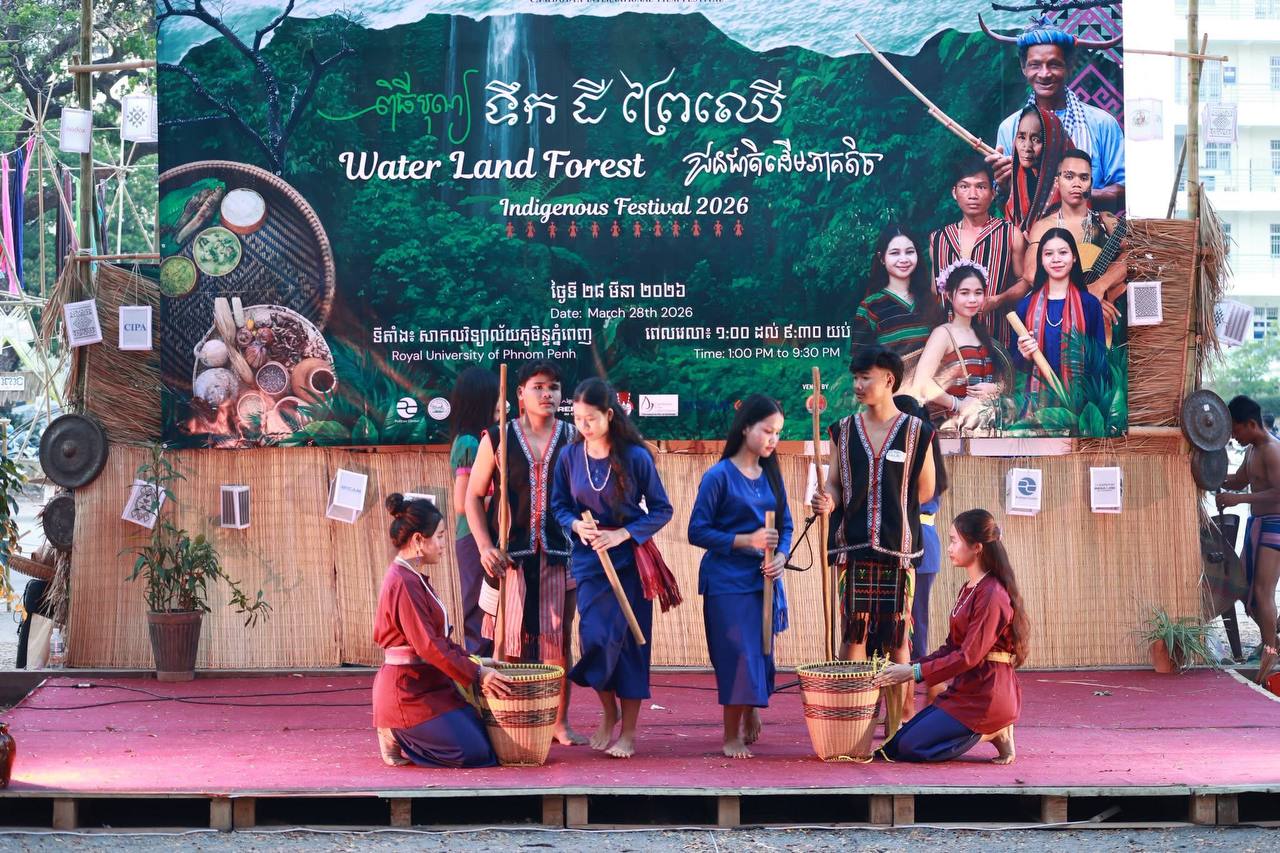
As the 15th Cambodia International Film Festival (CIFF) unfolds across the capital, a profound narrative shift has taken root. Far from the glitz of mainstream cinema, the 2026 festival has transformed into a high-stakes platform for Cambodia’s indigenous peoples, particularly the women who stand at the frontlines of environmental defense. While the festival traditionally celebrates the diversity of film, this year’s “Indigenous Voices” program, supported by the CIFF, the Bophana Center, and various international partners, serves a dual purpose: it is both a celebration of ancient heritage and a dire warning to the global community regarding the accelerating loss of biodiversity.
The significance of the Indigenous Festival within CIFF 2026 cannot be overstated. It represents a landmark moment where the Indigenous Peoples of Cambodia transition from being subjects of ethnographic study to the authors of their own stories. For the indigenous communities involved, this is not merely an exercise in cultural preservation or the showcasing of traditional attire and dance. It is a strategic intervention. By bringing their lived realities to the screens of Phnom Penh, these communities are issuing a public ultimatum: the survival of Cambodia’s remaining primary forests is inextricably linked to the legal and social recognition of indigenous land rights and Traditional Knowledge (TK), as highlighted by The Phnom Penh Post.
Central to this movement are the indigenous women of Cambodia. In many of these communities, women are the primary repositories of TK, holding the specific scripts for seed preservation, medicinal plant usage, and the spiritual protocols required to interact with the “spirit forests” or Prey Neak Ta. Their roles as water-bearers and subsistence farmers place them in a unique position of vulnerability and strength. When an Economic Land Concession (ELC) or an illegal logging operation encroaches upon ancestral territory, it is often the women who are the first to notice the thinning of the canopy or the contamination of the stream. Consequently, they have become the most vocal defenders of the landscape, often leading patrols and facing the brunt of legal harassment or physical threats from those seeking to exploit natural resources.
The situation for indigenous peoples in Cambodia remains precarious, characterized by a persistent tension between state-led development and customary land tenure. As reported by the International Work Group for Indigenous Affairs (IWGIA), these patterns are driven by ongoing state and transnational corporate ventures for resource extraction—mainly timber, minerals, and agribusiness—coupled with growing in-migration. Despite the 2001 Land Law and the 2002 Forestry Law, which theoretically provide for Communal Land Titling (CLT), the process remains agonizingly slow and fraught with bureaucratic hurdles. In the interim, vast swathes of indigenous land in provinces like Mondulkiri, Ratanakiri, and Preah Vihear have been carved up for rubber plantations, mining, and industrial agriculture. Within this context, indigenous women face a double burden. They must navigate a patriarchal broader society while simultaneously fighting to maintain their traditional status within their own communities, where their influence over land management is often undermined by modern administrative structures that favor male leadership.
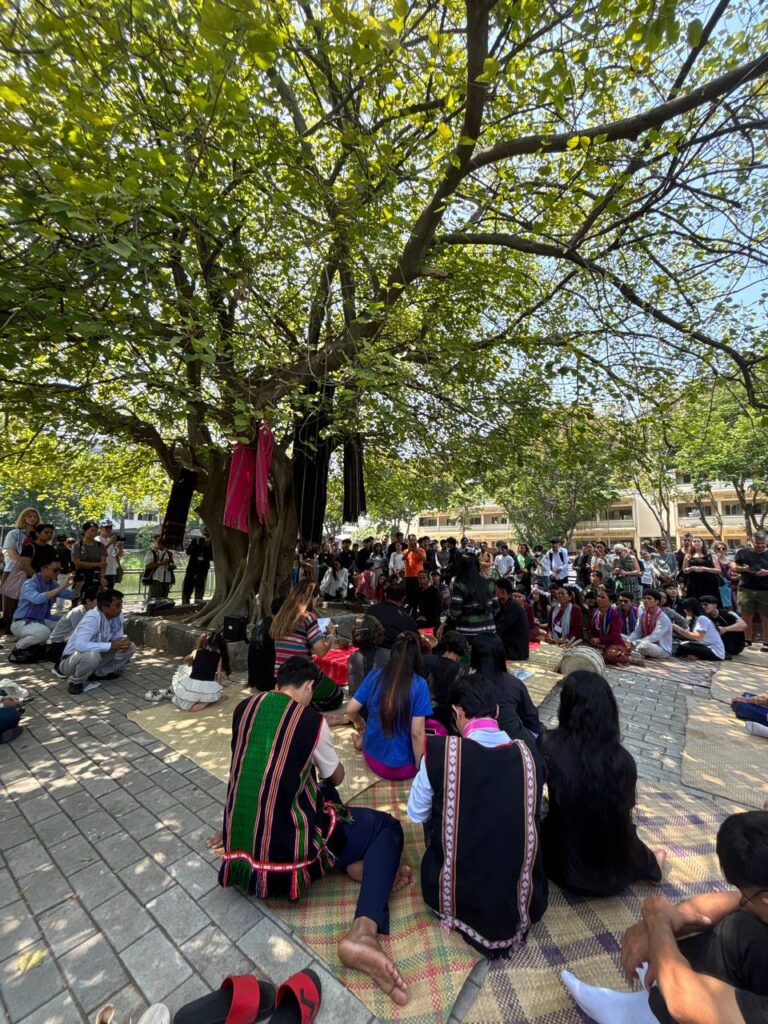
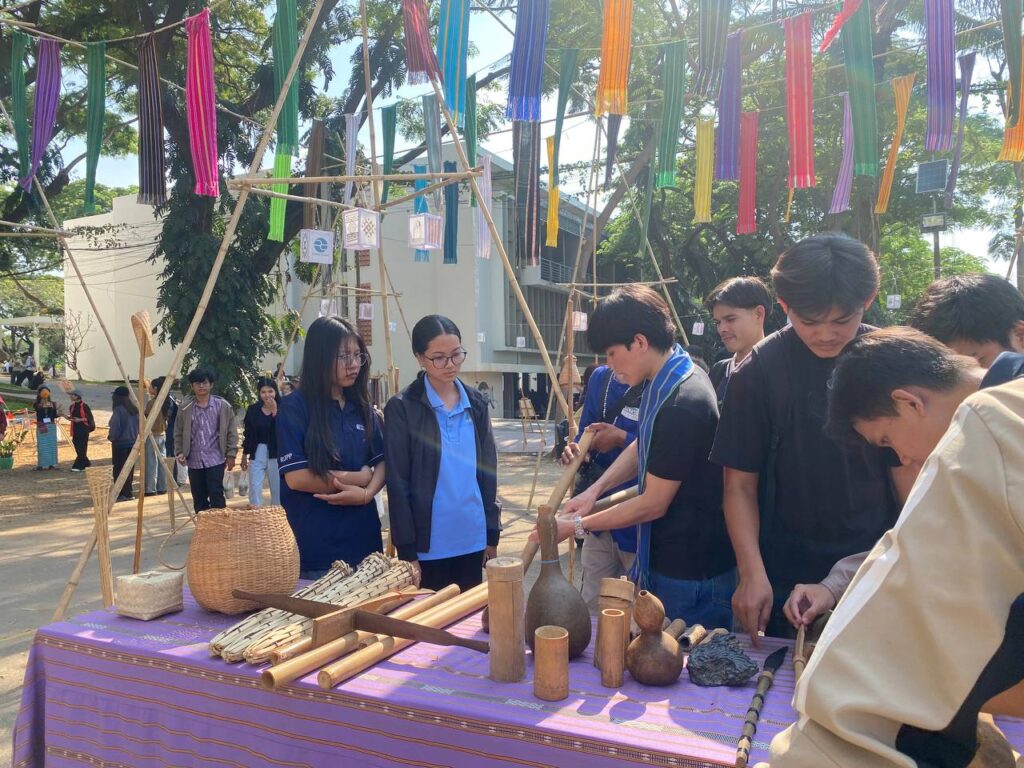
The films showcased at the festival highlight how these women use their voices to bridge the gap between ancient wisdom and modern activism. Many of the documentaries produced by indigenous youth and elders focus on the intergenerational transfer of knowledge. They illustrate how a woman’s understanding of a specific forest patch is not just about biology; it is about a spiritual contract that ensures the forest remains standing for the next seven generations. This all-day event at CIFF serves as a critical bridge between rural defenders and urban audiences, as detailed in reports from Cambodianess. Furthermore, the role of these women as the “spine” of their communities is echoed in the work of the International Work Group for Indigenous Affairs (IWGIA), which tracks the ongoing struggle for self-determination in the region.
The importance of the 2026 festival lies in its ability to humanize these statistics. When an Indigenous voice speaks on screen about the loss of her “Spirit Forest,” it is not just talking about trees; it is talking about the death of a library, a pharmacy, and a church. The festival serves as a warning that without urgent intervention to recognize these contributions, the world loses more than just carbon sinks; it loses the blueprints for sustainable living. The intervention requested by these communities is clear: the formalization of land rights and the inclusion of indigenous women in the high-level decision-making processes regarding environmental policy.
As the festival concludes, the message resonates beyond the cinema halls. The defense of land, water, and forest in Cambodia is no longer a localized struggle. It is a central pillar of the national and global climate strategy. By spotlighting indigenous women, CIFF 2026 has provided a mirror to the public, asking whether Cambodia is willing to sacrifice its most effective climate defenders for short-term economic gains. As reported by IPS Voice, the stage is now set for indigenous voices to take a permanent role in the conservation dialogue. The answer, as suggested by the powerful testimonies of the women in these films and supported by findings from the United Nations Human Rights Office (OHCHR) in Cambodia, must be a resounding shift toward justice, recognition, and the honoring of the traditional knowledge that has kept the Mekong’s forests alive for centuries.