

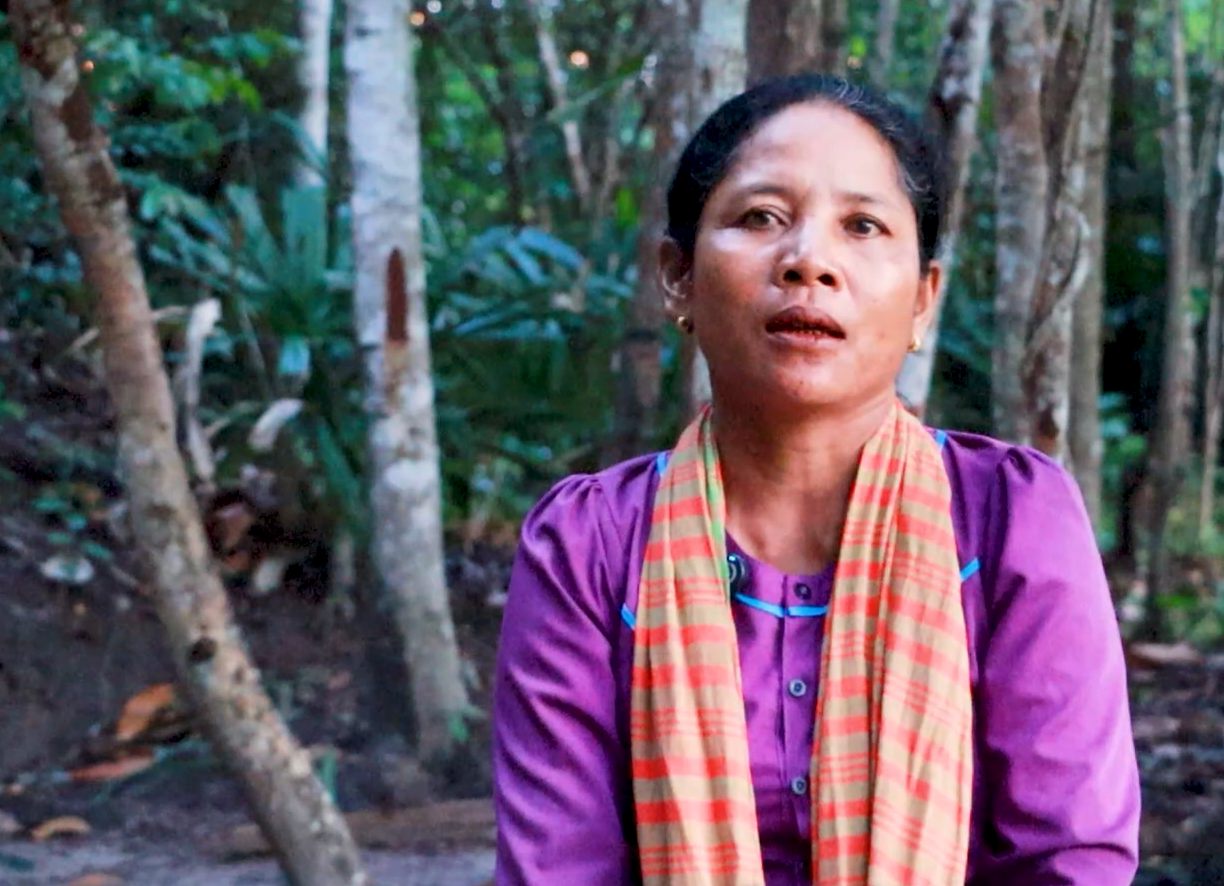
Ms. Loun Nin serves as more than just the Second Deputy of the Community Forestry Committee; she is a natural-born leader who views the survival of the forest as inseparable from the survival of her people. Her story is one of profound sacrifice, resilience, and a deep-rooted belief that “the forest is a market and the land is life.”
Leading by Example Amidst Hardship
Loun Nin’s journey was not easy. In the beginning, many doubted her because of her socioeconomic status. She recalls people saying they wouldn’t follow her because she was poor, yet her passion for natural resources never wavered. She led by action—often traveling through the dark of night on a motorcycle without lights, braving heavy rain to attend community meetings and coordinate forest patrols. Despite her lack of formal education in reporting, she dedicated her mental energy to organizing youth groups to document forest crimes, even when faced with threats to her safety from illegal loggers and land encroachers.
A Cultural Bridge to the Next Generation
Beyond forest protection, Loun Nin has revitalized the Kui identity through three core community groups: traditional weaving, indigenous dance (Thon), and traditional cooking. She recognized that if the forest disappeared, so would the Kui traditional cuisine—natural ingredients like wild mushrooms and forest vegetables cannot be farmed; they must be gathered from the wild.
She has successfully mobilized the youth, teaching them that cultural preservation and environmental protection are two sides of the same coin. By organizing performances, she has helped young people earn income for their studies, gaining the support of parents who now see the value in maintaining their indigenous heritage.
A Vision for the Future
Loun Nin’s leadership has shifted the mindset of her community from individual survival to collective prosperity. She advocates for the empowerment of women, noting that while many faced criticism from their families initially, their success in bringing resources back to the household has earned them respect.
Her plea to the government and partner organizations is practical: she seeks support for sewing machines, a dedicated facility for traditional cooking, and, most importantly, a reliable market to sell indigenous products. Her message to her fellow indigenous women and youth is clear:
“Do not think only of your own family. We must sacrifice for the community, because if we only live for ourselves, we will lose our natural resources and our tradition forever.”