
In Kokir village, Kampong Thom province, there is a brave woman named Loun Sinoun. She is from the Kui indigenous group. For a long time, Sinoun and the women in her village lived only from the forest and farming. But life is getting harder because outsiders are trying to take their community forest land.
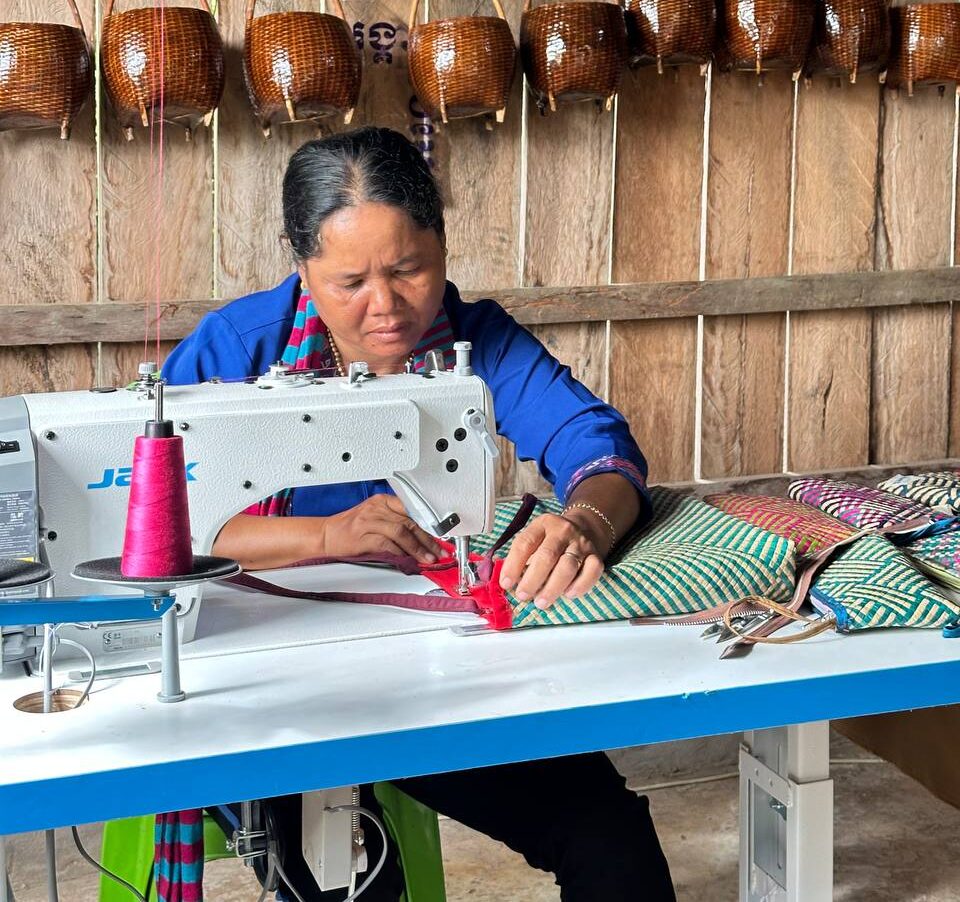
Recently, Sinoun received a professional sewing machine. This help came from the Cambodia Indigenous Women Association (CIWA) with support from DCA. Before she got this machine, making bags was slow and difficult. Now, her work has changed. She can sew strong zippers and design different styles of handles for her bags. Her bags look professional and beautiful now.
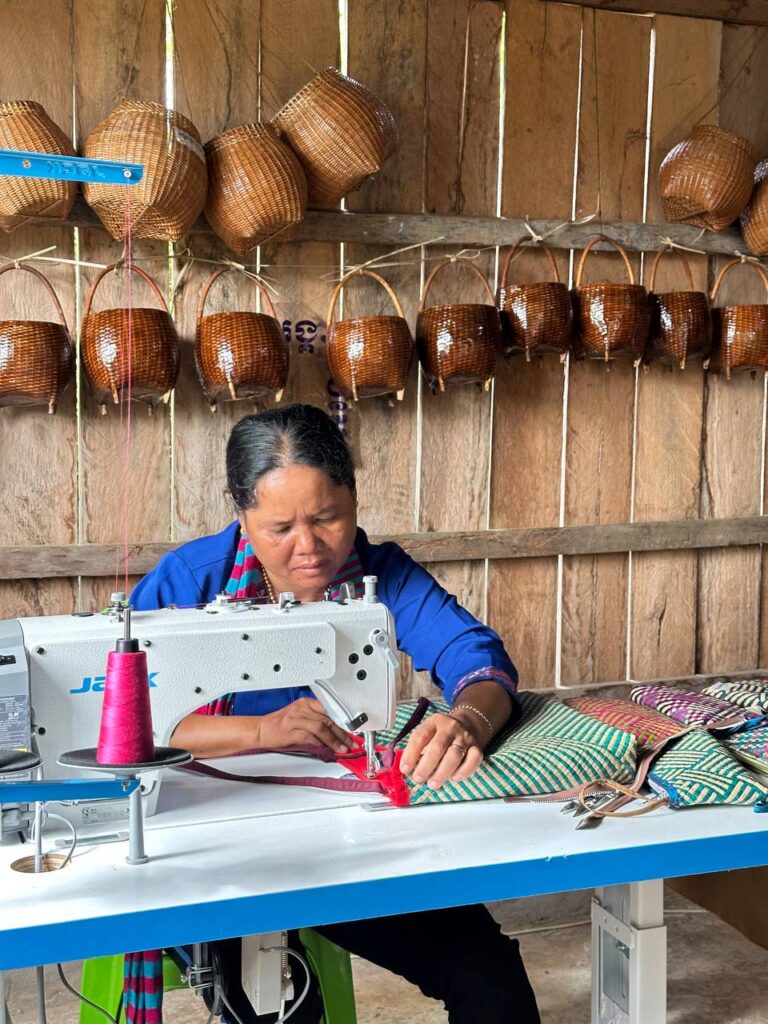
This machine is not just for Sinoun’s family. It is for all the Kui women. When Sinoun makes more money from her bags, she helps her neighbors too. Because they have a way to earn money at home, they don’t have to leave their village to find work.
Sinoun is also a leader in protecting the forest. She and other women are very active in stopping people from destroying their trees. For Sinoun, every bag she sews is a way to keep her culture alive. If the women are strong and have good jobs, they can stay together to protect their land for the next generation.
Protecting the Forest Through Economic Power
Sinoun’s work is inseparable from her role as a forest protector. As outsiders increasingly encroach upon the Kui’s registered community forest, the pressure on indigenous livelihoods intensifies. For many women in Kokir, the choice is often between migrating for low-wage labor or staying to defend their ancestral lands.
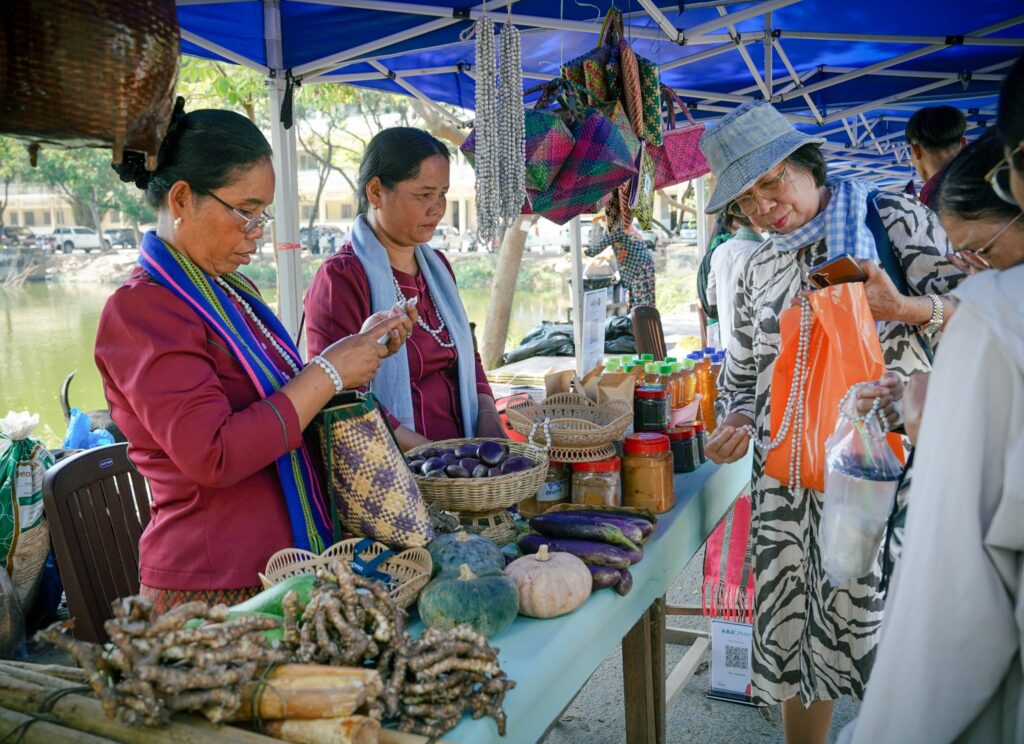
By improving her bag-making business, Sinoun is creating a blueprint for economic resistance. Her success offers a viable alternative to forest-depleting activities, proving that the Kui can thrive without sacrificing their environment. As she scales her production, she isn’t just supporting her own family; she is providing a model for other women in the community. Her workshop serves as a hub where forest-dependent women can learn new skills, diversifying their income and strengthening their collective resolve to stand against land encroachment.
“When women have the means to support their families from within the village, our community stays whole, and our forest stays protected.”
The vibrant pink thread currently running through Sinoun’s machine is a testament to this bright future—a future where indigenous Kui women use every tool at their disposal, from ancient weaving techniques to modern machinery, to keep their heritage and their forests alive.